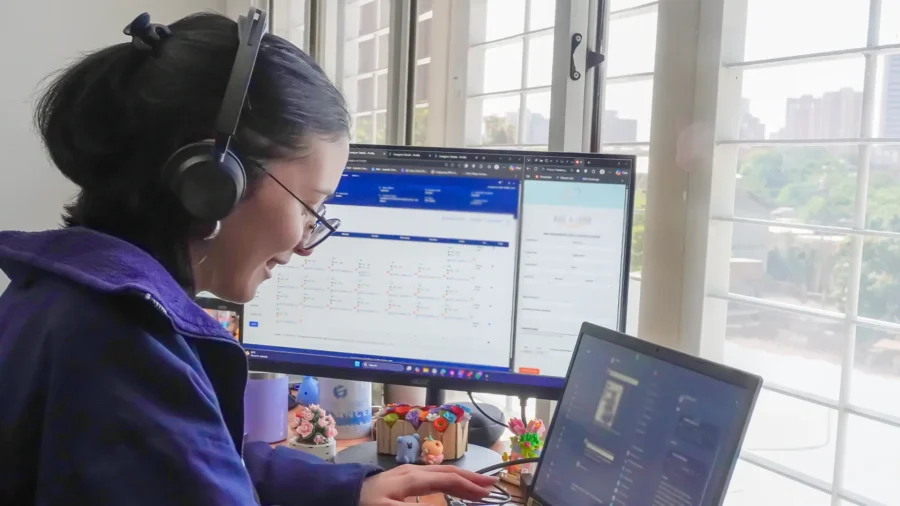



It’s Thursday night and the pipeline report says what you already know. Three weeks ago you were closing, so nobody was prospecting. Now the calendar is empty, and the only person who can fill it is you. So you open the CRM, pull a list, and start sending emails at 10 p.m.
Most founders run sales in this loop for years. The last attempt to fix it was a commission-only rep found online, or a lead generation agency that sent meetings nobody wanted. Both ended the same way: back to you and the list.
You can hire a remote sales development representative who owns the top of your pipeline every day, works your hours, calls your prospects in fluent English, and stays. The difference is not the person or the country. It is the model: a dedicated SDR matched to your business, with someone accountable for the relationship after day one. This guide covers what an SDR actually does, how the role differs from a sales rep, which sales role your company needs right now, and how to hire one without repeating the last experience.
Why the pipeline dries up every time you close
A sales team of one cannot prospect and close at the same time. The work competes for the same hours, and closing always wins because it is closer to revenue. That is not a discipline problem. It is a structure problem, and it has a name: the founder is doing a job that should have been split in two.
Three patterns keep companies stuck there:
- Hiring a closer when the gap was prospecting. A full-cycle rep spends the first months building a list instead of selling, then leaves for a job with inbound leads.
- Renting meetings from an agency. The meetings arrive, but the agency’s SDR works six accounts, follows a generic script, and never learns your customers. Show rates fall, and so does trust in the channel.
- Nobody managing the hire. When a remote rep goes quiet, you become the sales manager, the coach, and the HR department.
None of these is a reason to keep prospecting yourself. Each one is a design flaw to avoid when you hire the role.
What a remote sales development representative actually does
A sales development representative owns the top of the funnel: finding and contacting prospects, qualifying them, and booking meetings for the person who closes. The one number an SDR owns is qualified meetings on the calendar. Done well, the role returns the prospecting hours to the founder and makes the pipeline predictable month to month.
Outbound prospecting and cold calls
Building lists against your ideal customer profile, calling and emailing in sequences, and following up until a prospect says yes or no.
Inbound lead qualification
Responding to form fills and demo requests within minutes, asking the qualifying questions, and routing the right leads to the right conversation.
Appointment setting and handoff
Booking the meeting, confirming it, and sending the closer a short brief so the first call starts informed.
CRM hygiene and pipeline reporting
Logging every touch, keeping stages current, and sending a weekly report on calls, conversations, meetings booked, and meetings held.
What stays with you
The offer, the pricing, the closing conversation, and the decision on who you want as a customer. A good SDR protects your time for those four things and runs everything in front of them.
SDR vs. sales rep: what is the difference?
An SDR generates and qualifies opportunities; a sales rep closes them. The SDR is measured on qualified meetings booked, and the sales rep on revenue won. In a small company the founder often does both, which is exactly why the pipeline empties every time a deal gets close.
The roles need different people. Prospecting rewards volume, resilience, and consistency: a hundred dials a day, polite persistence, and a clean CRM. Closing rewards discovery, judgment, and negotiation. When one person has to do both, closing wins and prospecting stops. Splitting the roles is the first structural change most growing companies make to their sales function, and the SDR is usually the first hire.
SDR, BDR, appointment setter, or account manager: which sales role do you need?
Founders often ask for a “salesperson” when the real gap is specific. The title matters less than the number you want someone else to own.
| Role | What they own | You need one when |
|---|---|---|
| Sales development representative (SDR) | Outbound and inbound prospecting, qualification, meetings booked for the closer | You close well but the calendar empties every time you stop prospecting |
| Business development representative (BDR) | Outbound only: cold outreach into new accounts, partners, or markets, usually with a longer research step per account | You sell into a defined list of larger accounts and need someone opening doors, not working inbound |
| Appointment setter or telemarketer | High-volume calling from a list, a short script, and a booked slot on someone’s calendar | You have a proven offer and a list, and the only missing step is the call |
| Account manager | Renewals, upsells, and the relationship with existing customers | Revenue from current customers is leaking because nobody owns the follow-up after the sale |
If your gap is the phone ringing with customers who need help rather than prospects who need calling, that is customer support, not sales; see hiring a remote customer service representative. If the bottleneck is your own calendar and inbox, start with how to hire a remote executive assistant.
Should I hire a telemarketer or a sales development representative?
Hire a telemarketer or appointment setter when the job is volume: a proven script, a list, and a fixed outcome such as a booked demo or a confirmed appointment. Hire a sales development representative when the job needs judgment: researching accounts, qualifying against criteria, handling objections, and deciding which prospects deserve the closer’s time. Freelance Latin America places both roles, and the choice usually comes down to how much of the conversation you can script in advance. If the answer is “most of it,” an appointment setter is the faster hire. If the answer is “not much,” you need an SDR.
How to hire a remote SDR in 5 steps
Define the one number the role owns
Decide what a qualified meeting means for your business, in writing: company size, the title on the call, the problem they confirmed, and the next step agreed. Then set the monthly target from your own calendar. If you closed one in four meetings last quarter, you know how many meetings you need.
Build the list and the profile before the hire
An SDR without a list spends the first month researching instead of calling. Write the ideal customer profile, export the first 300 accounts from your CRM or a data tool, and draft the three reasons a prospect should take the call.
Screen for spoken English and resilience, not just resumes
Run every finalist through a live mock call. Play a busy prospect who says “we already have a vendor” and listen for three things: clear spoken English, a calm second attempt, and a question instead of a pitch.
Test with a real call block
Give the top two candidates a two-hour block with twenty real accounts, your script, and access to a test pipeline. Review the recordings and the CRM notes afterward. Two hours of real dials tell you more than any interview.
Plan the first 30 days around one channel
Start with the channel that already produces meetings, usually the phone. Give the SDR a seat in your own CRM and dialer, a daily fifteen-minute huddle for the first two weeks, and one deliverable per week: calls made, conversations held, meetings booked. Widen to email sequences and LinkedIn once the call block is consistent.
Why U.S. and Canadian businesses hire their SDRs in Latin America
There are three reasons, and none of them is price.
The same working day. Professionals in Latin America work within UTC-3 to UTC-5, with full overlap with Eastern and Central time and most of Pacific time. Your SDR is dialing at 9 a.m. your time, when your prospects are at their desks, and on the team huddle at the same hour as everyone else.
Fluent English on every call. English at a B2 level or higher, with Spanish as the native language. SDRs placed through Freelance Latin America make outbound calls to U.S. and Canadian prospects in English, and the Spanish is an extra channel for businesses with Spanish-speaking customers.
Matched to your business. Freelance Latin America recruits sales professionals against the profile you wrote, the number you defined, and the CRM and dialer your team already uses. The SDR works inside your tools, so the pipeline data stays yours.
Looking for sales development talent in Latin America? What to check before you hire
Check four things: whether the person works your hours or a shifted schedule, whether they are dedicated to you or shared across other companies, who manages performance and payroll after the hire, and what happens if the match does not work. Those four answers separate a managed placement from a profile on a marketplace.
Hiring on your own vs. a fully managed team partner
You can run the process above yourself. Many founders do. The time is yours to spend, and the risk stays with you.
| Hiring on your own | Fully managed team partnership | |
|---|---|---|
| Sourcing and vetting | You post, screen, and run the mock calls | Candidates are vetted against your profile and your number |
| Payroll and compliance | You handle cross-border payments and contracts | Managed for you under a flat monthly fee |
| Equipment and IT | Yours to solve | Coordinated for you |
| After the hire | You manage performance alone | Ongoing account management |
| If it does not work | You start the search over | 30-day replacement guarantee |
At Freelance Latin America, most searches take two to three weeks from kickoff. We support more than 100 active placements, our annual retention rate is 80%, and the average placement stays 36 months. For sales development, that continuity is the whole point: the SDR who learns your market this quarter is the one still booking meetings next year, instead of a new face every six months. You can read how the 30-day replacement guarantee works in our FAQs.
What one company built from a single phone role
CareSphere, a home healthcare provider in Pennsylvania, needed to recruit nearly 100 caregivers a month and had been burned by hiring channels that delivered volume but not quality. Their leadership started with one test: “If it works, if they do the job, then absolutely.”
They began with a single Candidate Intake Specialist, a role built on inbound and outbound calls, screening questions, and virtual interviews, often with clients watching. That first hire performed, so they added another, and the team grew from one role to eight, spanning intake, attendance monitoring, care coordination, and admin support. Several team members earned performance-based bonuses in their first months. The full story is in the CareSphere case study.
The pattern is the one most sales teams follow: one phone role, measured on one number, that earns the next hire.
Frequently asked questions
What does a sales development representative do?
A sales development representative finds and contacts prospects, qualifies them against your criteria, and books meetings for the person who closes. The role is measured on qualified meetings booked and held. In a managed placement, the SDR is dedicated to one company and works inside that company’s CRM and dialer.
What is the difference between an SDR and a sales rep?
An SDR generates and qualifies opportunities; a sales rep closes them. The SDR is measured on meetings booked, and the sales rep on revenue won. Growing companies split the two roles because prospecting stops whenever one person has to do both, and the SDR is usually the first hire.
Can a remote SDR in Latin America make outbound calls to U.S. prospects?
Yes. SDRs placed through Freelance Latin America make outbound calls to U.S. and Canadian prospects in English at a B2 level or higher, during your business hours, from within UTC-3 to UTC-5. They work inside your CRM and dialer, so every call is logged in your own pipeline.
How do I measure a remote sales development representative?
Track four numbers every week: calls made, conversations held, qualified meetings booked, and meetings held. Set the monthly meeting target from your own close rate, and review the recordings of a few calls each week for the first month. A dedicated SDR who works only for you reaches a consistent weekly number faster than anyone shared across accounts.
How long does it take to hire a remote SDR?
It depends on how you hire. On your own, plan for the time to post the role, run mock calls, and test finalists with a real call block. With Freelance Latin America, most searches take two to three weeks from kickoff, and every placement includes a 30-day replacement guarantee.
Start with one number
You do not need a full sales team. Pick the number that goes to zero when you stop prospecting, qualified meetings on the calendar, and hand it to someone qualified to own it every day. If you want help defining the role and finding the right person, book a 15-minute discovery call.